
Your state is telling you what kinds of graduates it needs and, in some cases, where it is willing to invest.
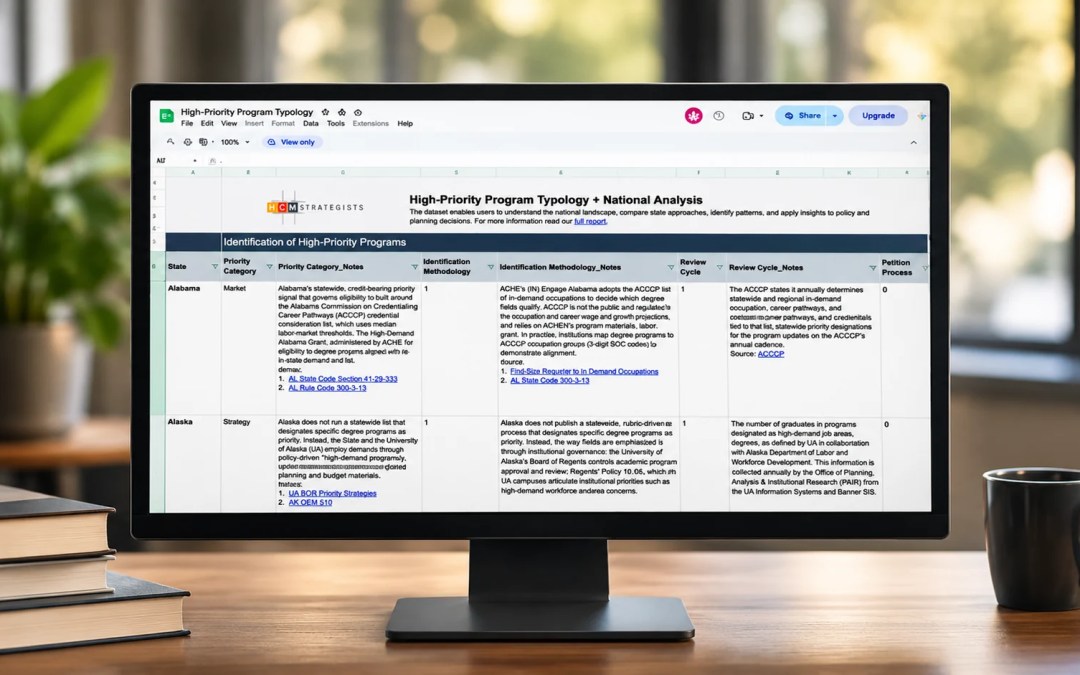
HCM Strategists just released a new 50-state analysis showing how states identify and finance high-priority academic programs.
That’s valuable market intelligence. This is information you should be using to inform your academic strategy.
All 50 states now have some method for identifying high-priority academic programs.
Forty-nine provide targeted financial aid for students pursuing designated fields.
And the priorities are not limited to high-paying STEM careers. Many states are also recognizing fields with significant social value, which could create opportunities in areas such as teaching, nursing, behavioral health and other service-oriented professions that fit naturally with the missions of many Christian colleges.
Even better, HCM has made the data available in an interactive spreadsheet that allows you to examine your own state’s priorities and compare them with other states.
This is worth sharing with your provost, CFO and enrollment leader.
States are increasingly identifying the fields they believe matter most to their workforce and economy, then using financial aid, targeted investments and other incentives to encourage students and institutions in those directions.
For Christian colleges considering new academic programs, expanding existing ones or evaluating their current portfolio, this information could be particularly valuable.
Here are a few questions worth exploring:
- Which academic programs does your state consider high priority?
- How well does your current academic portfolio align with those priorities?
- Are there state financial aid programs that could make some of your degrees more affordable and attractive to students?
- Could you develop new academic programs or partnerships that respond to documented workforce needs?
- Are neighboring states prioritizing programs that could create additional recruitment opportunities?
Of course, state workforce priorities should not dictate your academic strategy.
Your mission matters. So do student demand, institutional strengths, program economics and your ability to deliver an education that is meaningfully different.
But academic strategy should be informed by more than internal conversations about which programs faculty want to offer or which degrees competing colleges are launching.
Before your next academic portfolio discussion, explore the 50-state analysis here: https://hcmstrategists.com/high-priority-programs
At TG Three, we help Christian colleges make better strategic decisions about their academic portfolios, enrollment and revenue growth. If you’re considering where to grow next, let’s talk.